
Understanding the “Middle Eastern Collectivist” Culture Cluster and Why Integration Feels So Different: A Case of Syrian Immigrants in Sweden
Many of the cultural challenges faced by Syrians in Sweden are not uniquely Syrian. They belong to a broader “Middle Eastern collectivist” cultural cluster shared by countries such as Iraq, Lebanon, and Afghanistan. This post explains how that dimension differs from Swedish cultural values and how it shapes experiences in school, work, and society. It is the first in a series exploring cultural clusters among immigrant communities in Sweden.
BRIDGING STRATEGIESGLOBAL APPLICATIONPROFESSIONAL & WORKPLACE CULTURE
12/7/20255 min read
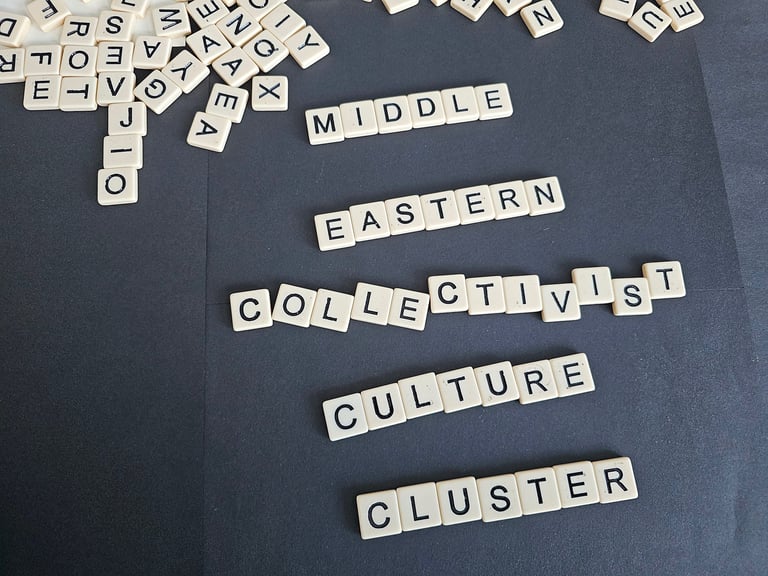
Are the Cultural Challenges faced by Syrians in Sweden uniquely Syrian ?
Many of the cultural challenges faced by Syrians in Sweden are not uniquely Syrian. They belong to a broader “Middle Eastern collectivist” cultural cluster shared by countries such as Iraq, Lebanon, and Afghanistan. This post explains how that dimension differs from Swedish cultural values and how it shapes experiences in school, work, and society. It is the first in a series exploring cultural clusters among immigrant communities in Sweden.
Why Culture Is Not About Countries, But Clusters
Why do some immigrants seem to adapt easily to Swedish society while others struggle, even when they are highly motivated and capable? The answer is rarely about intelligence, effort, or goodwill. More often, it is about culture – not as nationality, but as cultural logic.
Sweden operates according to a very specific cultural system: individualist, low-context, egalitarian, and highly autonomous. When people arrive from societies built on different values, even simple everyday interactions can become emotionally exhausting and confusing.
This post is the first in a series where we explore immigrant cultures in Sweden through cultural clusters, not stereotypes or flags on a map. Instead of asking,
“Where are you from?”
we ask,
“How does your culture view authority, relationships, communication, and responsibility?”
In this article, we focus on what we can call the Syrian dimension, also known as the Middle Eastern collectivist cultural cluster. Future posts will explore African collectivist cultures, hybrid cultures such as Iran and Turkey, and European neighboring cultures. To get a better understanding on what culture clusters are to begin with and how they are better tools for discussing integration, read introductory article, Why Culture Clusters Matter More Than Countries in Understanding Integration in Sweden or Similar Cultures published previously
Culture Clusters: A More Accurate Way to Understand Integration
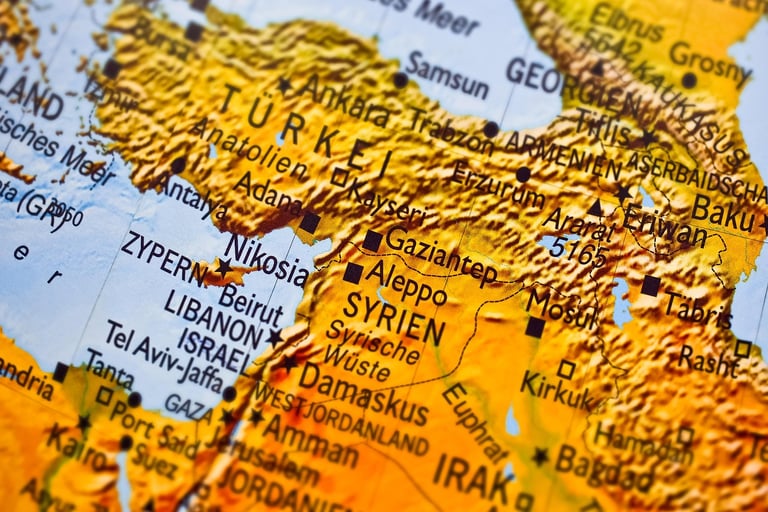
People from a Syrian culture share many cultural patterns with people from: Iraq, Lebanon, Jordan, Palestine and Afghanistan to name a few.
Societies in this dimension tend to be:
Collectivist rather than individualist
High-context rather than direct
Relationship-oriented rather than task-oriented
Hierarchical rather than flat
Emotionally expressive rather than emotionally neutral
This does not mean everyone is the same. It means people grow up learning a similar cultural grammar. When this cultural system meets Swedish culture, friction is natural and predictable.
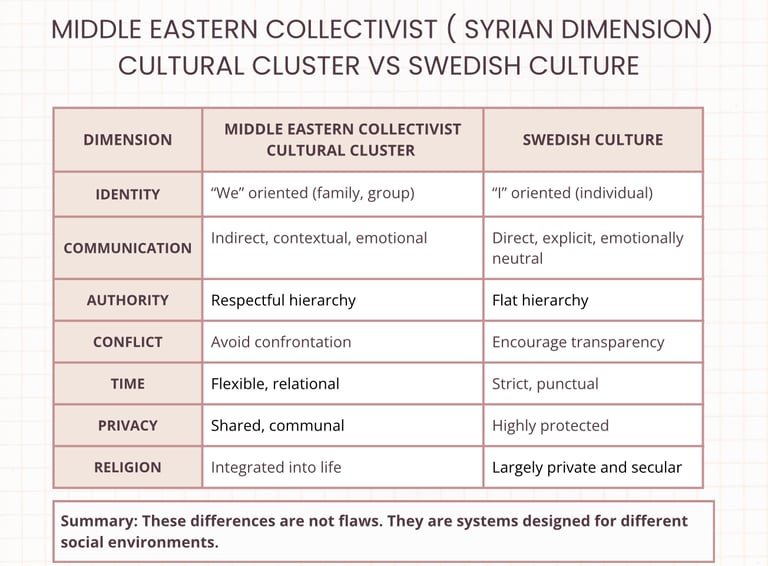
Misunderstanding these different cultural dimensions can lead also to misunderstanding communication signals sent and received by people coming from different cultural dimensions. I will illustrate how these can manifest themselves in a school setting, a workplace setting and in society at large.
Challenges in School
Students with a Cultural Dimension Similar to Syrian Culture May, in Sweden, Experience:
Difficulty questioning teachers (they may see it as disrespectful)
Confusion over informal teacher-student relationships
Hesitation in mixed-gender group work
Struggle with independent learning and self-initiative
Discomfort discussing religion, politics, or sexuality openly
To Someone with a Cultural Dimension Similar to Swedish Culture, these students may appear:
Passive
Unmotivated
Lacking critical thinking
When in reality they are:
Showing respect
Avoiding shame
Preserving harmony
Teachers in Swedish Schools may misread:
Silence as lack of interest
Collectivism as dependance
Need for orders as lack of initiative
Challenges in the Workplace
Colleagues with a Cultural Dimension Similar to Syrian Culture may, at Swedish Workplaces, have:
Confusion over flat hierarchy (“Why does my manager act like a colleague?”)
Discomfort with independent decision-making-would rather be told/instructed what to do than act independently
Fear of making mistakes publicly, which freezes the courage to act when unsure.
Difficulty interpreting direct feedback-might sound impersonal and blunt
They may experience:
Stress
Withdrawal
Feelings of social rejection
Swedish Employers may misinterpret:
Silence in meetings as not being engaged while it actually implies showing respect
Respect to hierarchy as lack of confidence while it is meant to show respect and structure
Fear of open criticism as not being transparent while it is a way of Preserving dignity
Emotional tone as unprofessional while it is meant to signify Honesty and sincerity
Loyalty to and prioritizing family as lack of reliability while it is meant to signify Moral responsibility
Challenges in Society at Large
Someone with a Cultural Dimension Similar to Syrian Culture in Sweden May Experience:
Shock over: Extreme individual freedom; Dating culture; Weak role of extended family and Parenting norms emphasizing child autonomy
Risk of: Isolation; Cultural identity conflict and Retreat into ethnic enclaves
Swedes may interpret people with a Cultural Dimension Similar to Syrian Culture ,in Sweden, as:
“Too traditional”
“Not integrating fast enough”
“Too religious”
Often without realizing that: Integration is not about abandoning identity, but learning a second cultural language.
Why This Is Not Just About Syrians
This same cultural dimension applies strongly to Iraqis, Afghans, Lebanese and Palestinians. It also applies partially to Somalis, Eritreans and Sudanese. That means one cultural framework explains many immigrant experiences in Sweden. This is why using culture clusters is more accurate and fair than judging individuals by nationality.
How These Challenges Can Be Addressed
Cross-cultural misunderstanding is not a challenge that is impossible to solve. With the right knowledge and motivation people from different cultural dimensions can, not only co-exist, but thrive. Challenges in cultural misunderstanding can be addressed through:
Cultural Literacy: Schools and workplaces need cultural education, not just language support.
Bicultural Mentorship: This functions through pairing immigrants and Swedes as mutual cultural interpreters.
Explicit Norms: Norms need to be explained and clarified
Explain for example that:
“In Sweden, disagreement is not disrespect.”
“In Syrian culture, respect is often shown through restraint.”
Safe Dialogue Spaces: Mistakes should be learning tools, not proof of failure.
Reframing Integration
From “They must adapt”
To “We must understand how two systems meet.”
The Final word: Integration Is Cultural Translation, Not Cultural Erasure
What Syrian and any other people from different social clusters as Sweden experience in Sweden is not a failure of motivation. It is a collision between two deeply different cultural logics. When we stop treating culture as nationality and start seeing it as clusters, integration becomes clearer, kinder, and far more effective.
This post is the first in a series exploring immigrant cultures in Sweden through cultural clusters. Next, we will look at the African collectivist cluster, followed by hybrid transitional cultures and then European cultural neighbors.
Understanding culture is not about choosing sides. It is about learning to live in more than one world at the same time.
Next steps?
Want more tips, tools, and real-world examples for navigating bicultural communication?
Subscribe to the blog to get regular updates or While at it, be sure to write a comment in the comments section and share your view on this and any other related subjects.
Sources consulted:
Annika Rabo, Paula Estrada Tun, Emma Jörum, Syrians in Sweden: Constructing Difference Regarding Gender and Family, Journal of Refugee Studies, Volume 34, Issue 2, June 2021, Pages 1291–1306, https://doi.org/10.1093/jrs/feab007
Jönsson, J. H. J. (2024). “We pupils had to hear…” Marginalised youths’ experiences of racialising language and symbolic violence in Swedish schools. Social Policy and Society. https://doi.org/10.1017/S147474642400XXX
Alitolppa-Niitamo, A., Andersson, I., & Diderichsen, F. (2022). The work environment of immigrant employees in Sweden: A systematic review. Journal of International Migration and Integration, 23, 2235–2268. https://doi.org/10.1007/s12134-021-00931-0
European Commission. (2025). Sweden: Understanding public opinions towards integration. https://home-affairs.ec.europa.eu/whats-new/publications/sweden-understanding-public-opinions-towards-integration_cs
Your comments and engagement is well appreciated. All comments will be reviewed and responded to but be sure to read the commenting policy before submitting.