
“Moving to Sweden: 5 Cultural Tips for New Immigrants from Contrasting Cultures
When visiting or moving to Sweden, whether for studies, work, or business, the little cultural details can shape how people see you. First impressions matter everywhere. In Sweden, first impressions are shaped by punctuality, simplicity, and respect for personal space. Add your own form of cultural warmth, in measured doses, and you’ll find your way quickly. I wrote this post to share 5 Cultural tips that new immigrants from contrasting cultures should know about interacting in Sweden.
Santino Zhakata
8 min read
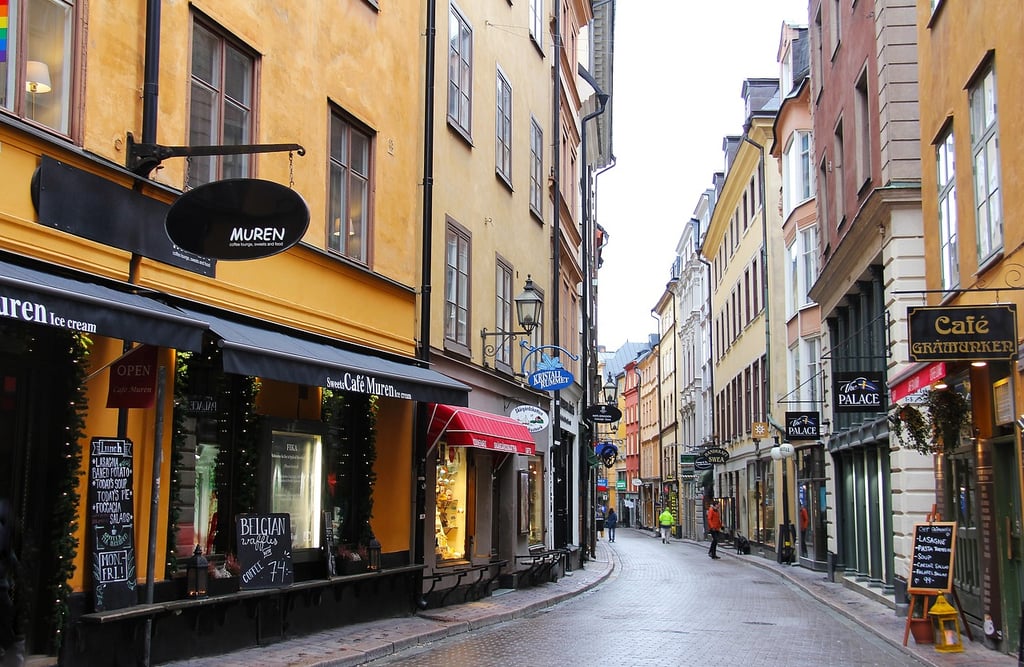
When visiting or moving to Sweden, whether for studies, work, or business, you’ll encounter a few cultural norms that can feel very different especially if you're coming from a culture that has sharp contrast with Swedish values. Zimbabwe, where I originally come from, is one such example and this experience taught me a lot.
I wrote this post in reply to a Zimbabwean friend's question on what good advice I have to share with him as he has recently got a scholarship to study in Sweden. I decided to share my advice in a blog post instead of a long email to him. So as you read through this, keep in mind that even though the advice may seem especially directed to someone from Zimbabwe, it is not limited to that only. The tips shared in here can be useful to anyone who is new to Sweden or who might share a culture that contrasts with the Swedish culture and wonders how to navigate it.
Here are 5 key cultural tips to help you integrate smoothly:
Greetings: Keep them simple: In Sweden, greetings are brief and straightforward. A firm handshake, eye contact, and a simple “Hej” (hello) is usually enough.
Punctuality is non-negotiable: Swedes take time seriously. Arriving late for appointments or meetings is often viewed as disrespectful.
Respect Personal Space & Quiet: Swedes often communicate calmly and appreciate silence. Maintaining considerate distance in social and public settings is common.
First Conversations: Direct but Reserved: In Sweden, small talk is limited and conversations are direct, calm, and reserved. Swedes may not rush to open up, but once they trust you, relationships can be deep and long-lasting.
Dressing the part: In Sweden, dress codes are more relaxed, but still neat. Swedes prefer functional, clean, and simple clothing rather than flashy or overly formal styles.
What to Expect When Moving to Sweden: A Quick Cultural Guide
When Moving to Sweden
It is not uncommon that some start their contact with Sweden many stages before they actually set foot in Sweden, for example through contact with different agencies and authorities or searching about Sweden on the web. I , however, wrote this post to prepare you for culture exchange that comes as soon as you set foot in the country. The interaction with people and culture.
When you first step into Sweden, whether for studies, work, or business, the little cultural details can shape how people see you. First impressions matter everywhere, but in a cross-cultural context they matter even more. For a Zimbabwean like myself or another culture used to a warm, expressive, and community-centered way of interacting, Sweden may feel like a complete contrast.
So how do you make a positive first impression without losing yourself? Let’s explore the key differences and what they mean in practice as I share 5 tips that newcomers should know about interacting in Sweden.
I should mention that each and every one of these 5 tips deserves its own entire post, and I plan to do that in the near future. But, for now, I decided to give a brief rundown of them here so that you may see the overall picture first.
5 Cultural Tips for Immigrants to Sweden
1. Greetings: Keep It Simple
In Zimbabwe, most of sub saharan Africa, and other countries with similar cultural traits, greetings are often long, warm, and expressive. You might exchange handshakes and ask about general health or even in some cases ask about the family. If you are like me you might view a greeting as something like a ritual.
In Sweden, greetings are brief and straightforward. A firm handshake, eye contact, and a simple “Hej” (hello) is usually enough. Eyes are windows into the soul , some may say. Swedes view eye contact as a gesture of honesty and openness, consequently avoiding eye contact might be invite suspicion, like someone has something to hide.
Swedes are not comfortable asking people they have just met about their health or family as these are considered highly private matters thus awkward to discuss with people they have just met. So don’t be surprised if no one asks you in return about your health or family at first meeting , as would be the case in Zimbabwe. It’s not coldness, it’s just cultural and more related to the Swedish view of efficiency.
One culture expert who was talking about the Scandinavian cultures referred to this as "the economy of words". While some cultures with wide vocabulary use many words to express very little, others have very few words and they use them economically to express only the necessary, I would say Sweden is one such culture.
Another explanation might be the need to keep greetings short so one can get down to business and keep up with schedules...which brings me to tip number two below-Punctuality.
Tip for newcomers to Sweden: Keep greetings short, but don’t lose your smile. Swedes will appreciate your warmth once they get to know you.
2. Punctuality is Non-Negotiable.
Time in Zimbabwe can be flexible — a 10 o’clock meeting might actually start at half-past. In Sweden, punctuality is taken very seriously. Arriving even five minutes late, without a good reason, can be seen as disrespectful or unreliable. This explains why most Swedes often come a few minutes before a scheduled meeting or event starts-socially and professionally, physically and online.
This is one of those areas that set Swedes apart from people from other less time -strict cultures. The Swedish system runs on time and punctuality. Transport and other services are time sensitive. People are where they are supposed to be at the times they are supposed to be there. This applies in both work or private life.
In Zimbabwe and a few other cultures in Africa at least, as far as I know, closeness is a natural part of social interaction. Standing shoulder to shoulder, touching an arm for emphasis, or leaning in during conversation feels natural.
In Sweden, personal space is sacred. People prefer to maintain a noticeable distance when talking, and "unnecessary" physical contact is avoided. Even on public transport, Swedes often sit with an empty seat between them, if possible.
After my first few months living in Sweden, I began studies in a city roughly 2 hours way by train or bus. I had to commute daily. I remember that on one of my first trips, I saw an empty seat next to one guy and sat down quickly. He appeared a bit startled and shifted himself further into the window, where he stared out during most of the trip.
4. First Conversations: Direct but Reserved
This tip might sound like a repetition of tip 1 and 3, but view it rather as emphasis. Zimbabweans often use small talk — about family, weather, or football — as a way of bonding. In Sweden, small talk is limited and conversations are direct, calm, and reserved. Swedes may not rush to open up, but once they trust you, relationships can be deep and long-lasting.
As I have just mentioned, while it is common to chat with strangers in Zimbabwe, doing the same in public spaces in Sweden can make people feel uncomfortable. Swedes value quiet in public spaces-they prefer to keep conversations private and purposeful.
Tip for Newcomers: Don’t worry if a Swede seems quiet or doesn’t ask personal questions right away. It’s not disinterest — it’s cultural. Instead, focus on being polite, clear, and respectful in your communication.
5. Dressing the Part
In Zimbabwe, dressing neatly and smartly is part of showing respect, and maintaining dignity, especially in business or formal settings. In Sweden, dress codes are more relaxed, but still neat. Swedes prefer functional, clean, and simple clothing rather than flashy or overly formal styles. In most social settings one can get by with dressing "smart casual" instead of overdressing in very formal outfits.
I remember how as a school teacher in Zimbabwe I was required to always have a shirt tucked into my trousers and have a neck tie on. It made me feel awkward at times especially in the rural schools where half of my students had worn-out clothes or no shoes at all. I remember how most teachers celebrated when they were allowed to start wearing Chinese collared shirts or African shirts that required no neck tie. Today, I still enjoy the casualness of wearing jeans and t-shirt to work as a teacher in Sweden.
Tip for Newcomers: Keep it smart-casual. Avoid overdressing for casual settings, but make sure you look presentable and practical.
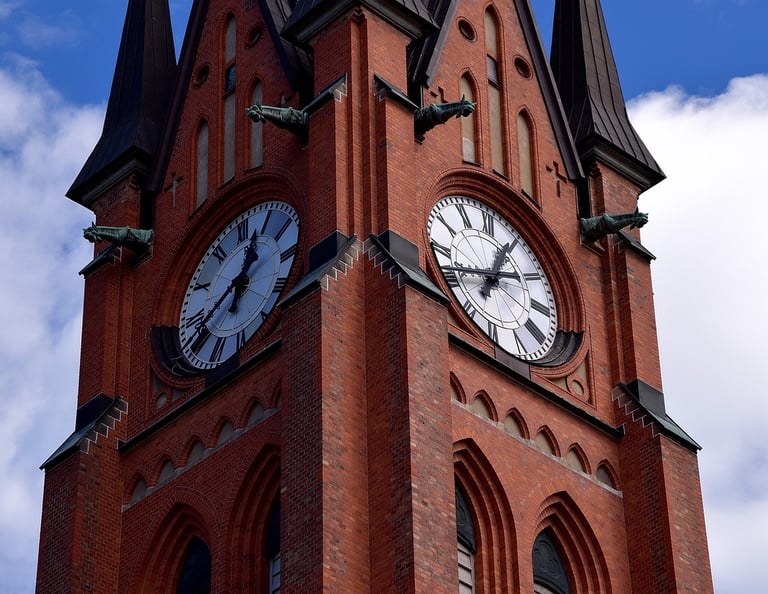


I remember once during my first days how I arrived 15 minutes late to a lunch date with my Swedish classmates. I found them already halfway through their meal. They didn’t complain, but later I noticed they stopped inviting me. In Sweden, lateness is quietly noted, even if no one says anything. I also remember an occasion when I missed a train. It was scheduled to arrive at the platform at 14.25 and stop for 2 minutes. It did just that- Unfortunately for me , I was standing at the wrong platform a few meters away and wasn't fast enough to reach it. All I could do was witness it roll away. I learned my lesson then.
Tip for newcomers to Sweden: Aim to arrive 5–10 minutes early for meetings or social gatherings. It shows respect for people’s time and builds trust quickly.
3. Personal Space & Quiet : Respect the Bubble
It was until much late that I realised what that had been all about. I had apparently invaded his space, without warning. I learned quickly that Swedes will avoid sitting on an empty seat next to someone else if there are other unoccupied seats on a bus or train, unless they know each other of course - which is a whole different issue altogether. Once Swedes have established relations, they break down many of these walls and can create deep, loyal and lasting relations. But before that, leaving you sitting alone next to an empty seat on the bus is a way of respecting your personal space. Similarly, choosing to seat where one can leave an empty space is a way of claiming personal space.
The opposite applies in Zimbabwe, where on public transport people begin by filling up all the empty spaces next to other passengers first. Conversation with the stranger on the next seat is common and a long bus trip will certainly feel more pleasant or even shorter with a travel companion to chat with. As a rule, minibuses, especially in the city, never leave the main station unless all seats are occupied. Conversations are shared freely across seats and over heads...which leads me to my next point of discussion, first conversations.
Tip for Newcomers to Sweden: Be mindful of body language and space. A little distance signals respect in Sweden, not rejection. Respect the bubble!
Final Thoughts: Balance Your Roots with Cultural Awareness
As a Zimbabwean (or any newcomer in fact) in Sweden, you don’t have to abandon who you are. Your natural warmth, resilience, and openness are strengths. What matters is adapting them to the Swedish context. By mastering punctuality, respecting personal space, and embracing direct communication, you’ll make a lasting first impression that opens doors to trust and collaboration.
Remember, cultural intelligence is not about changing yourself, it’s about expanding your perspective. The more you observe, listen, and learn, the easier it becomes to navigate everyday life and professional spaces with confidence. Over time, you’ll find a rhythm where your Zimbabwean (or other) friendliness meets Swedish structure, creating a unique blend that reflects the best of both worlds.
In the end, it’s not about fitting in perfectly, it’s about connecting meaningfully while staying true to who you are. Good luck and see you again on upcoming posts!
Do you know someone navigating cross-cultural communication in Sweden? Share this with them.
Your comments and engagement is well appreciated. All comments will be reviewed and responded to but be sure to read the commenting policy before submitting.